Sources
| Source | ID | Link |
|---|---|---|
| GoodReads | 50300850 | https://www.goodreads.com/book/show/50300850 |
| Amazon | B081VS4PPD | https://www.amazon.com/dp/B081VS4PPD |
Description
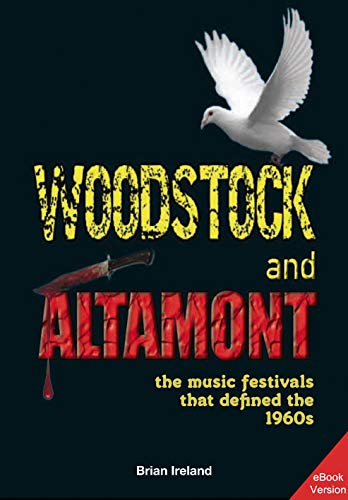
Less than four months separated the Woodstock and Altamont music festivals in late 1969 but in that short period of time Americans witnessed perhaps the highpoint and the nadir of the 1960s counterculture. Country Joe McDonald, a notable performer at Woodstock, sums up the popular memory of both festivals: ‘Woodstock and Altamont seem like bookends to the great social experiment of the late 60s.’ If the celebration of music and the counterculture at Woodstock offered hope that the future might be an enlightened ‘Age of Aquarius’, Altamont’s violence offered a counter-narrative about the failures of the love generation.
As enticing as this interpretation of events is, however, it offers only a partial understanding of the era; crucially, it fails to situate Woodstock and Altamont within their musical context. Music was not peripheral to the events of the 1960s, nor was it simply the soundtrack to the decade: it was, in fact, an important catalyst for change. It was for this reason that contemporary cultural commentators understood Woodstock and Altamont in the framework of newly-developing music festival culture. They were, after all, only two out of around 300 large rock festivals held in the USA between 1967-71, which attracted a combined audience of around three million people. These festivals allowed tens of thousands (and on occasion, hundreds of thousands) of young people to gather and engage with similarly-minded people about issues that were important to them, among which were the conduct of the war in Vietnam, the military draft, free speech, civil rights, gender equality, drug use, spirituality, capitalism — even revolution.
To understand the full impact and significance of Woodstock and Altamont, this book — published in the 50th anniversary year of these festivals — explores not just performers such as Jimi Hendrix, Janis Joplin, Joan Baez, The Rolling Stones, The Who, and Jefferson Airplane, but also the dynamic political and societal changes of the era, and the musical milieu which gave them meaning.